Creative education does not end at graduation.
And creative community should not dissolve when a course finishes.
Lylac exists to strengthen the connective tissue that supports creative practice: during study, across disciplines, and into professional life.
The Conditions Emerging Creatives Face
Young creatives are entering an industry shaped by precarity, rising living costs, fragmented digital environments, and increasing isolation.
The creative industries continue to grow in economic value, yet early career practitioners face unstable employment pathways, competitive visibility systems, and uneven access to opportunity.
Institutions preparing students for this environment are not only teaching craft. They are preparing people to navigate networks, collaboration, and long term sustainability.
That preparation requires infrastructure.
Supporting Peer Learning
Creative development rarely happens in isolation.
Peer critique, shared references, collaborative experimentation, and cross disciplinary dialogue are central to how creative thinking evolves.
Lylac provides digital studio environments that allow students and graduates to remain in proximity to one another’s work, not through fleeting feeds, but through sustained context.
What this infrastructure looks like in practice:
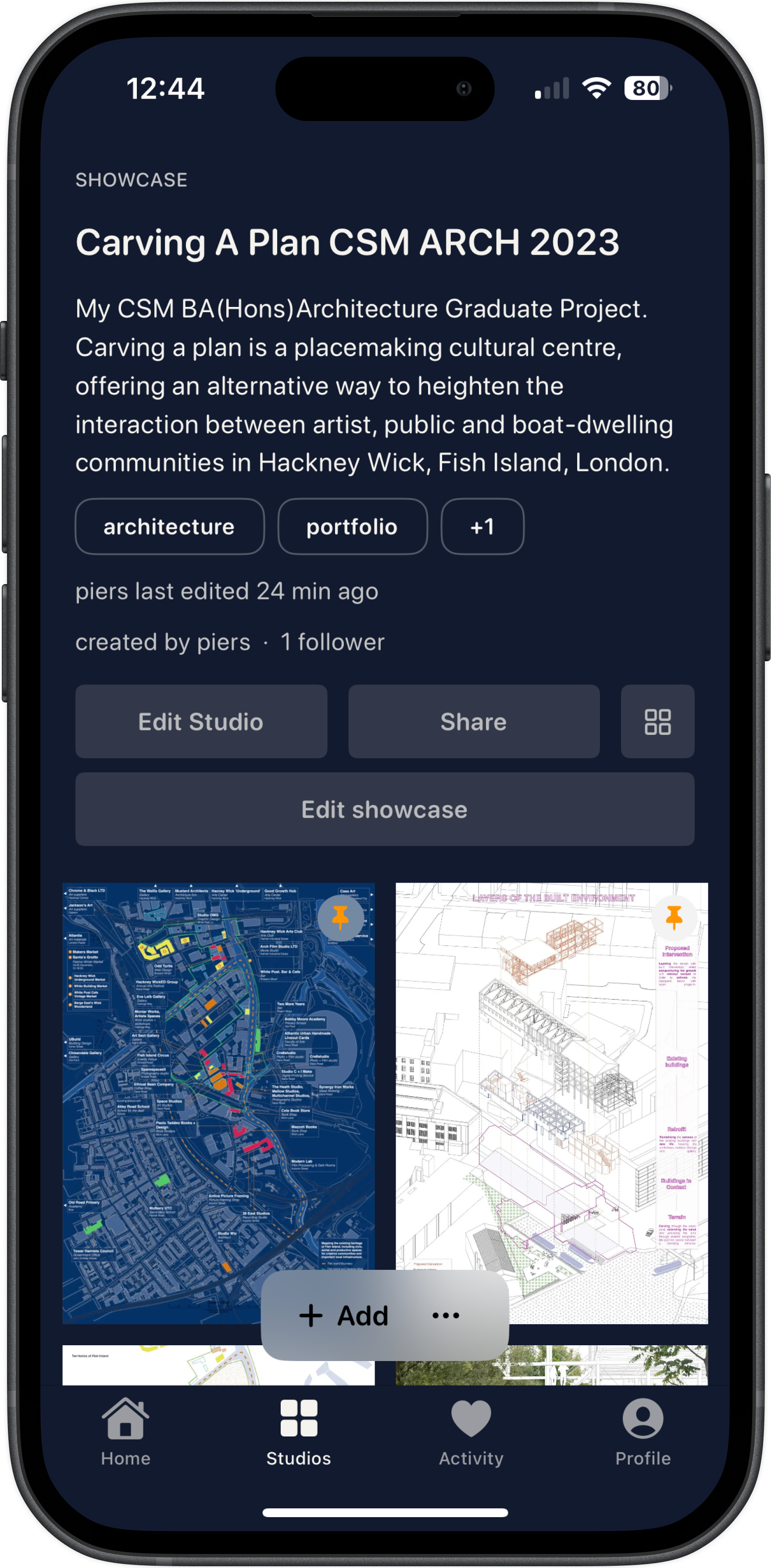
A portfolio-style studio for presenting finished work cleanly and authentically — shareable, legible, and built for creative outcomes, not engagement loops.
This supports:
- Ongoing peer learning
- Cross course and cross disciplinary exchange
- Shared archives of process
- Collaboration that extends beyond formal assessment
Graduate Preparedness and Portfolio Continuity
For many creatives, graduation creates a structural break.
Studio access changes. Peer networks disperse. Informal critique disappears. Work fragments across platforms designed for exposure rather than development.
Lylac helps maintain continuity, allowing work, references, and collaborative histories to persist beyond institutional timelines.
This strengthens:
- Portfolio development over time
- Professional visibility grounded in context
- Continued peer connection after graduation
- Creative identity formation across early career stages
Cross Disciplinary Innovation
Innovation often occurs at the edges between disciplines.
When architects stay close to designers, when filmmakers encounter writers, when artists remain in dialogue with technologists, new forms emerge.
Lylac supports proximity across practices, encouraging collaboration without forcing it.
We believe institutions benefit when creative ecosystems are designed to foster nearness rather than siloed production.
Long Term Cultural Responsibility
Digital infrastructure now shapes how creative communities function.
Institutions partnering with platforms must consider not only reach, but values: autonomy, sustainability, access, and respect for creative labour.
Lylac is built with long term cultural responsibility in mind.
We are committed to strengthening creative community in ways that support both emerging practitioners and the institutions that educate and collaborate with them.